



Army
The rash of suicides among Army troops, including reservists, abated for the first time in four years in 2011, the service reported Thursday. The total of 278 was a 9% drop from the year before. But the toll continued to climb in the active-duty force, rising from 159 in 2010 to 164 last year.
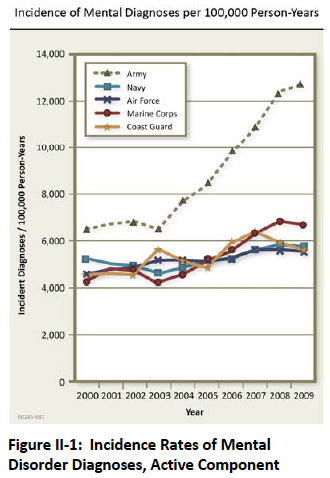
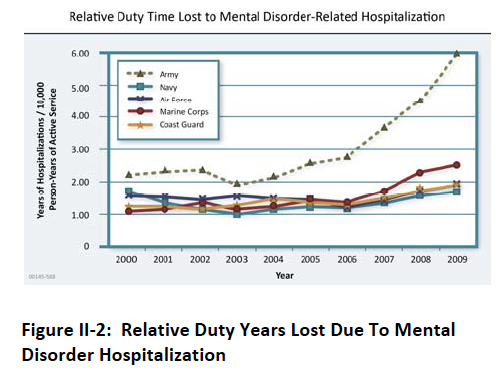
A pair of leading indicators of suicide – mental-health ailments and lost duty days due to them – continue at a far higher rate in the Army than the other services. Not only do mental-health hospitalizations last twice as long as those for physical wounds, they tend to lag behind combat and other trauma.
“This trend in both inpatient and resource commitment can be expected to continue over the next few years,” the Army said in a new 196-page report on its mental-health challenges after a decade of war. “These charts and other data, moreover, reasonably predict an increase in at-risk outcomes associated with behavioral health issues including reduced Army readiness, Soldier disability and increased Soldier and Family stress.”
arm
The Army didn’t shy away from pointing out its higher rates of mental-health ills, although possible reasons for them seemed lacking. “A dramatic increase in the incidence and prevalence of behavioral health issues, which contributed to the expansion of the Army’s at‐risk population, has fueled the growth for expanding Army behavioral healthcare,” says the new Army report, which bears a typical Army title: Army 2020: Generating Health & Discipline in the Force Ahead of the Strategic Reset Report 2012 (in four different fonts and colors, no less). “As evident by the green line, behavioral health diagnoses continue to increase among Soldiers, well above the other Services.”
Apparently the winding down of the wars in both Iraq and Afghanistan doesn’t mean the troops’ mental-health issues will end as well. “Many of our biggest challenges lie ahead after our soldiers return home, Army General Peter Chiarelli, the service’s No. 2 officer said, “and begin the process of reintegrating back into their units, families and communities.”