



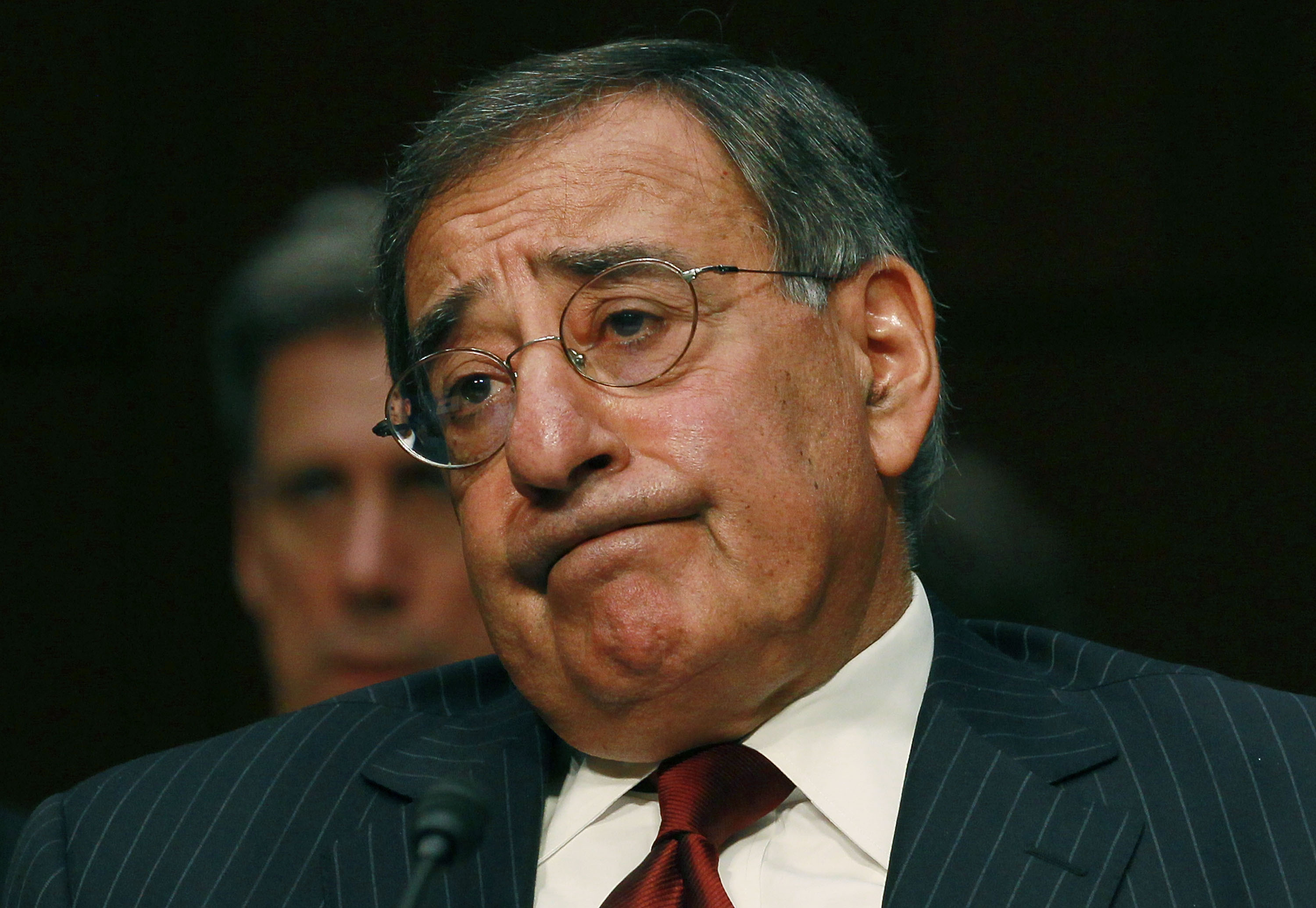
Leon Panetta on Capitol Hill earlier this month / Photo by Mark Wilson/Getty Images
When we first wrote about how the Pentagon could save $1 trillion over the coming decade way back in April, we felt more alone than an Air Force pilot in a drone hanger. Now everyone’s getting into the act. The most recent to weigh in: BusinessWeek magazine and the Financial Times newspaper. They write in the wake of the Super Committee’s failure last week to come up with $1.2 trillion in deficit reduction over the next decade. That means that sum will have to be cut from the federal budget – including 50% of it from national security – beginning in January 2013. Absent some congressional chicanery, Defense Secretary Leon Panetta had better start sharpening his House Budget Committee and OMB-bred spending-cutting chops.
Interestingly, the New York-based BusinessWeek sounds more opposed to $1 trillion in cuts (off a base of about $7 trillion), than the London-based Financial Times. That’s particularly striking given the accelerating collapse of Britain as a global military power worthy of the description.
BusinessWeek’s list of cuts, plucked from sister site Bloomberg Government’s calculations, suggests trimming $1 trillion from defense spending over the coming decade ($450 billion already agreed to by the Obama Administration and Congress, with at least as much required by the Super Committee’s failure) could mean killing the F-35 jet fighter and V-22 tilt-rotor, as well as sharp cuts in ship-building, missile defense and personnel accounts.
The FT doesn’t offer an itemized list. It simply notes:
The US Marines alone has more planes, ships, armoured vehicles and personnel in uniform than the entire UK military. With 11 naval battle groups, the US has more aircraft carriers than the rest of the world combined…Instead of warning the cuts would “tear a seam” in the US military, he could make a virtue out of necessity. Mr Panetta has a golden opportunity to build a leaner and more accountable Pentagon. He should seize it.
It’s also interesting that both organs, echoing Battleland, criticize Defense Secretary Leon Panetta for his recent rhetoric on the subject:
Although we agree that reducing projected spending by $1 trillion over the decade is very worrisome, we feel that Secretary of Defense Leon Panetta overstated the matter in calling it a “doomsday” scenario that “invites aggression.”
…BusinessWeek says.
…adds the FT:
…the prospect is nothing like as “devastating” as Mr Panetta has warned. The cuts would amount to roughly 15 per cent of the Pentagon’s base budget – without counting the costs of the wars in Afghanistan and Iraq. That may sound steep. But it comes after a 56 per cent increase in real defence spending since 9/11 – minus the wars.
Yet neither piece addresses the key to scaling back U.S. military spending: just what missions is the United States prepared to put on the back burner as “too costly” to continue doing right now? So long as that elephant remains outside the room, the real military-spending debate has yet to begin.