



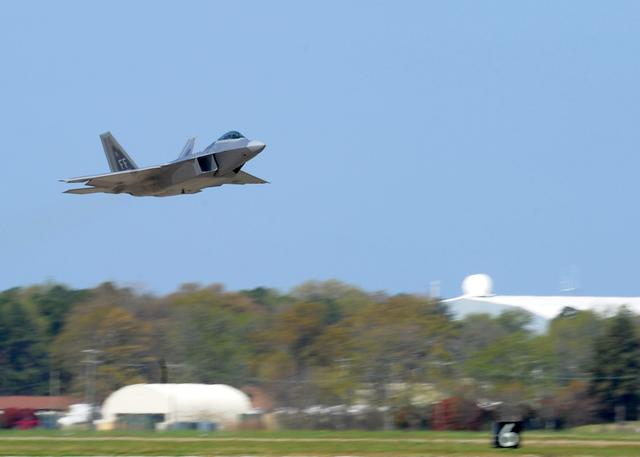
An F-22 lifts off from Langley Air Force Base in April / Air Force photo by Zachary Wolf
America’s Air Force has again grounded portions of its stealthy fleet of F-22 Raptor tactical fighter jets. This comes on the heels of a recent four-month grounding of the fleet earlier this year.
While the call for accountability is certainly warranted, Air Force leaders appear to be doing everything possible to keep the pilots safe while trying to identify the problem.
But, are politics playing any role in the decision to keep these jets on the ground yet again? Many air power followers were understandably suspect during Operation Oddysey Dawn as to why the F-22s never flew in Libya’s skies to implement a NATO no-fly zone.
The cause of the last grounding (lifted just hours ago) of these fifth-generation air superiority fighters echoes today’s pause: primarily due to pilots experiencing hypoxia-like symptoms. This apparently has been occurring over the span of several years. But still no one knows for sure.
While trying hard, the Air Force has discovered no smoking gun yet. Until leaders know exactly what is causing the problem, they can only mitigate risk to the crew and aircraft.
On the risk management front, Air Force leaders deserve some credit. Officials have conducted extensive testing that is ongoing to this day. Airmen took the engines out of the jets for examination, ran countless flight and ground run profiles, and re-trained air crews on the emergency oxygen systems on board. New protocols were put in place and back up systems were reviewed. The Air Force even added a warning system to the jets when oxygen levels start to fall.
Pilots are flying with canisters to catch possible contaminants inside the cockpit during flights. Data is also being collected and examined from pulse oximeters worn by the pilots.
Until now, the Air Force’s risk mitigation strategy included massive amounts of inspections of varying types on a daily and even sometimes near-hourly basis.
The grounding of this incredibly capable fighter hurts pilot and air crew training skills, which atrophy quickly. It is surely expensive to run all of these tests and add new systems as needed.
Air Combat Command spokesman Lt. Col. Tad Sholtis summarized the immediate need of the service’s F-22 mystery to Danger Room: more information. Cleary.
Also needed are insights as to why the Air Force is grounding some F-22s, but the Navy and Marine Corps are not grounding some F/A-18s Hornets also experiencing similar problems — albeit with a different Onboard Oxygen Generation System, according to Robert F. Dorr.
One would hope that politics plays no part in this decision on behalf of Air Force leadership.
Answers are needed, and fast. Thankfully, the U.S. Air Force appears to be desperately trying to crack this case.