



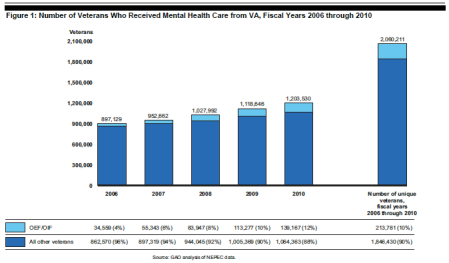
The share of post-9/11 veterans receiving mental-health care from the Department of Veterans Affairs — as part of the total number of veterans — is slowly but steadily rising. According to this chart (click to enlarge) from a Government Accountability Office report released Friday, U.S. vets from the wars in Afghanistan and Iraq represented 4% of total VA mental-health visits in 2006, a number that tripled to 12% last year.
Troops who fought in the current wars also are more likely to seek mental-health help from the VA than veterans of earlier wars, among all those seeking VA help. “Specifically, 38 percent of all OEF/OIF veterans and 28 percent of all other veterans receiving any health care during this time period received mental health care,” the GAO noted. “VA officials indicated that the increasing proportion of OEF/OIF veterans receiving mental health care is not unexpected because of the nature of OEF/OIF veterans’ military service—veterans of this era typically had intense and frequent deployments.” Also, the wars’ duration — and the fact that older vets are dying more than younger ones — are contributing to the trend.