
The Luckiest, and Saddest, Soldier in Afghanistan

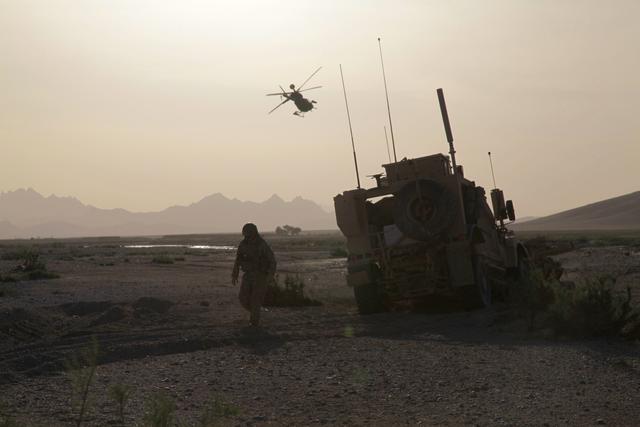
An IED-crippled MRAP in Afghanistan / Army photo by Alicia Brand
An OH-58 Kiowa Warrior helicopter flies over a crippled mine-resistant, ambush-protected (MRAP) vehicle from Charlie Company, 1st Squadron, 38th Cavalry Regiment, 525th Battlefield Surveillance Brigade, after an improvised explosive device strike in the Nawa Valley of Kandahar province, Afghanistan, April 28, 2011. U.S. Army Capt. Jon Cochran is pictured walking away from the damaged vehicle. (U.S. Army photo by Pfc. Alicia Brand/Released)

Former Defense Secretary Robert Gates was justifiably proud of his $45 billion push to speed up delivery of some 27,000 Mine-Resistant Ambush Protected armored vehicles to U.S. troops in Iraq and Afghanistan. The hulking troop-carriers have saved hundreds, if not thousands, of American lives. They roll as a rebuke to Don Rumsfeld’s  observation to troops concerned about going into harm’s way with so-called “hillbilly armor” that “you go to war with the army you have — not the army you might want.” But a recent deadly — and chilling — blast makes clear that MRAP protection can only do so much. War remains a constant seesaw, with offense trumping defense until defense builds up and counters offense. But beefing up armored vehicles adds weight, which requires more fuel to power them, which means more fuel convoys must traverse hostile terrain, which means more exposure to improvised explosive devices and other crude, but effective, weapons.

Insurgents killed five troops inside an MRAP last Thursday with a roadside bomb apparently filled with military-grade explosives. It blew the doors and turret off the vehicle, pushed its monstrous engine into the crew compartment, and sent a plume of smoke 200 feet into the sky. The Pentagon named the five soldiers killed on Sunday. “I don’t know what to do right now. My whole squad is gone,” PFC Jeremy Urzua told Stars and Stripes. He was supposed to be aboard that MRAP, but his squad leader — one of those killed in the blast — had given him Thursday off. “He just saved my life.”

Related Topics: Afghanistan, Army, Military, National Security, Pentagon, Troops, Weapons
  • Latest on Battleland

    MANDEL NGAN/AFP/GettyImages

    Only One Year of U.S.-Led Fighting Left

    President Obama’s goal at the NATO summit this week is looking increasingly clear: wrap up U.S. troops’ combat role over the coming year, and get the allies to pay more money to enable the Afghan military to fill the gap.

    Getty Images

    House Pushes for East Coast Missile Shield

    The House has approved a $643 billion defense-spending bill for 2013 that’s $3.7 billion more than the Obama Administration, and its Pentagon, is seeking. That’s just about the same amount the Congressional Budget Office estimates the House bill’s push for an East Coast missile shield will cost over the next five years.

    Photo by Ron Sachs-Pool/Getty Images

    The Pentagon’s “Washington Monument Strategy”

    Whenever federal bureaucrats running the nation’s parks get antsy that their purse is likely to shrink, they roll out something long known as the “Washington Monument strategy.” That’s the tried-and-true technique of warning the public that if money isn’t forthcoming, one of the first budget cuts will force the shutting down of the popular obelisk to Washington, D.C., tourists.

blog comments powered by Disqus