
New Spy Drone Shows the Kind of Contracting that Might Get Cut

The Spy Plane Program Costs have Doubled in Ten Years
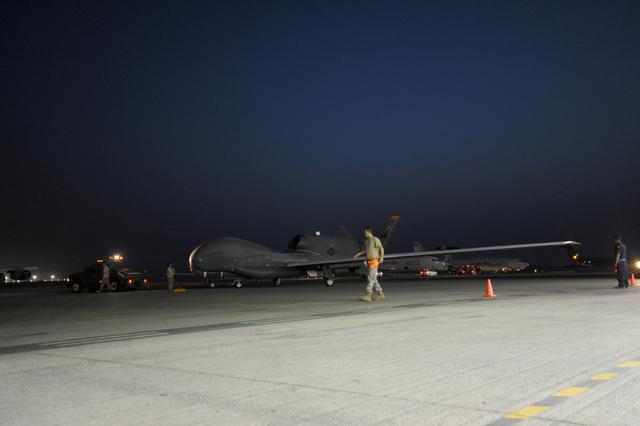
U.S. Air Force maintenance personnel with the 380th Expeditionary Aircraft Maintenance Squadron guide an RQ-4B Global Hawk aircraft into its hangar after completion of a sortie in Southwest Asia June 6, 2011. (U.S. Air Force photo by Master Sgt. William Greer/Released)

This is the Global Hawk, the super-high-flying spy drone that is supposed to replace the aging U-2. (Not the band, though Bono is aging.)

The New York Times had an interesting piece on the new $12 billion drone program this week. It notes that costs of the program have doubled in the past 10 years. Each one of these things, which can fly at 60,000 feet, now costs $218 million bucks.

It can fly for 24 hours and spot an enemy tank 100 miles away. That’s all great. But the article notes that the program raced forward to build these things before all the technology was ready. And that burned up millions.

That’s just the kind of contracting program that new Deputy Defense Secretary Ashton Carter might take a hard long look at.

Related Topics: Air Force
  • Latest on Battleland

    MANDEL NGAN/AFP/GettyImages

    Only One Year of U.S.-Led Fighting Left

    President Obama’s goal at the NATO summit this week is looking increasingly clear: wrap up U.S. troops’ combat role over the coming year, and get the allies to pay more money to enable the Afghan military to fill the gap.

    Getty Images

    House Pushes for East Coast Missile Shield

    The House has approved a $643 billion defense-spending bill for 2013 that’s $3.7 billion more than the Obama Administration, and its Pentagon, is seeking. That’s just about the same amount the Congressional Budget Office estimates the House bill’s push for an East Coast missile shield will cost over the next five years.

    Photo by Ron Sachs-Pool/Getty Images

    The Pentagon’s “Washington Monument Strategy”

    Whenever federal bureaucrats running the nation’s parks get antsy that their purse is likely to shrink, they roll out something long known as the “Washington Monument strategy.” That’s the tried-and-true technique of warning the public that if money isn’t forthcoming, one of the first budget cuts will force the shutting down of the popular obelisk to Washington, D.C., tourists.

blog comments powered by Disqus