



The Hawks' Manifesto
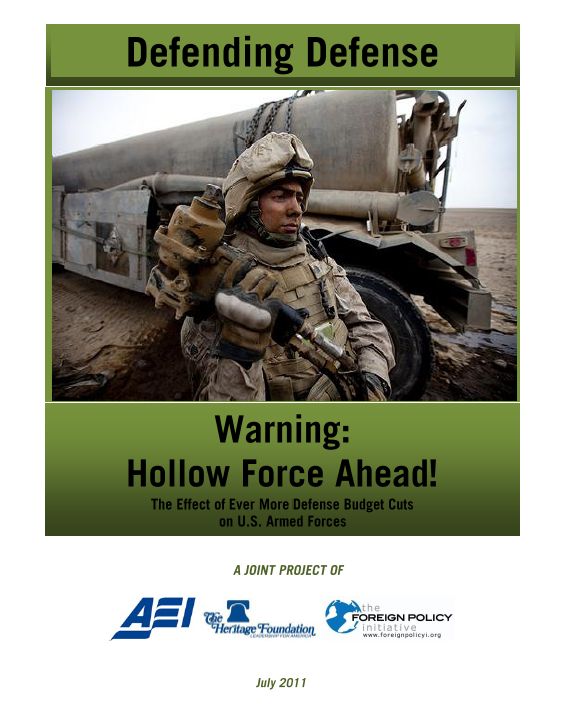
Sure, there have been skirmishes over defense spending in recent weeks, but now they’re shifting from small arms and irregular warfare to a combined arms campaign featuring the big guns and close-air support. As Nick Schwellenbach noted Thursday, a pair of do-gooder groups — Taxpayers for Common Sense and his own Project on Government Oversight — have called for cuts totaling $586 billion over the coming decade. Now a trio of more security-conscious outfits — the American Enterprise Institute, the Foreign Policy Initiative and the Heritage Foundation — have rolled out their logic for keeping military spending robust. Bottom line:
So far, the debate over long-term defense spending cuts has been a war among accountants—an abstract numbers game played with little regard for its concrete effect on the future of America’s armed forces and national security. This backgrounder describes the likely results of the significant defense spending reductions now being considered: a “hollow force” characterized by fewer personnel and weapon systems, slowed military modernization, reduced readiness for operations, and continued stress on the all-volunteer force. If realized, this modern day “hollow force” will be less capable of securing America’s interests and preserving the international leadership role that rests upon military preeminence.
It’s a vital debate. We’d encourage Battlelanders to read the report they think is wrong first.