



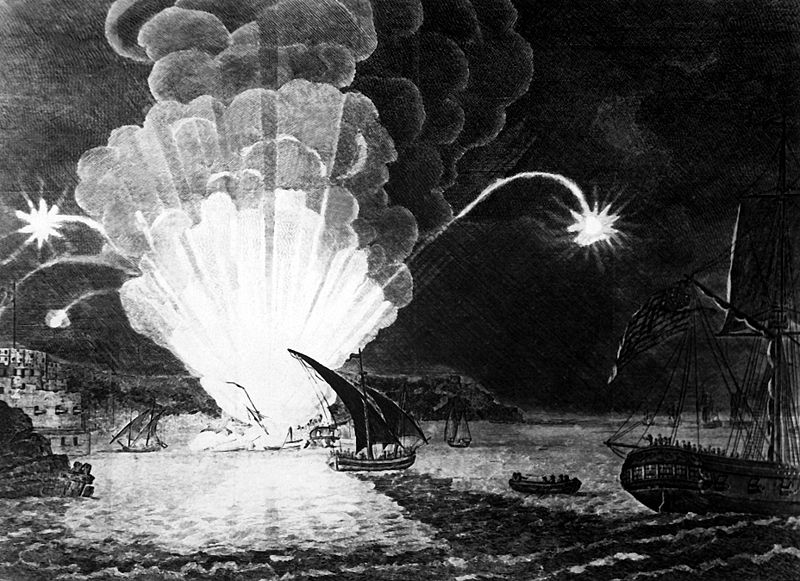
The USS Intrepid explodes in Tripoli harbor, Sept. 4, 1804
President Obama and his national-security team have said will be no “U.S. boots on the ground” inside Libya. Yet 13 U.S. Navy commandos remain interred on Libyan soil. There’s a growing push to bring them home after more than 200 years on the shores of Tripoli. It’s a strange tale: the 13, led by Navy Master Commandant Richard Somers, were aboard the “floating volcano” USS Intrepid, which was to move into Tripoli harbor to be blown up amid the pirate fleet there. But the vessel detonated prematurely on Sept. 4, 1804, killing them all.
Reports the Intrepid Project, which is seeking to have the 13 bodies brought back to the U.S.:
When their bodies washed up on the shores of Tripoli, the bashaw – the king of the pirates – invited a pack of dogs to devour them as American prisoners of war looked on. These 13 naval heroes remain buried today in two mass graves in Libya. One of those graves is unmarked and underfoot on the Tripoli plaza where Gaddafy has held his anti-America rallies for decades. Unfortunately, many Washington bureaucrats want to leave these men right where they are, buried like animals, not like American heroes.
Not sure who those Washington bureaucrats are, but — assuming Tripoli eventually becomes safe for U.S. forces — might be time to bring Master Commander Somers and his crew home at last.